18 junio 2006

Leer a gusto

Para que no digas que te pongo el caramelo en la lengua, y luego te lo quito, aquí comienzan mis propuestas de lectura veraniega. Pero antes, vaya una advertencia: no te fíes de consejos populares ‘Corte Inglés’ de best-sellers sobre los libros más leídos. ¿Por qué? Pues porque son falsos. Se paga la góndola, se paga la publicidad. Es pura imagen. Lo bueno, no hace falta anunciarlo. ‘No se hizo la miel, para la boca del burro’. Lector es sabio y pensador, no desocupado e inútil curioso. Lo más leído por todos, es como lo más socorrido para nadar: manguitos, chanclas, flotador, balón de playa, crema solar y aletas. Eso no sirve a un nadador deportista: es sólo para un gordo bañista, bastante distinto. Que haya más vagos refrescándose en el agua, que nadadores, no transforma lo que realmente es la natación.

Si quieres leer, debes superar la trama vacía de novela insulsa. Mucha acción, una gran trama y vivo enredo, un guión electrizante y cautivador, pero totalmente vacío de estilo y huero de contenido. Ni informa, ni educa o desarrolla. Es algo relajante, como el almohadón. Sirve simplemente para descansar, pero no enriquece. Jamás podemos suponer que esa lectura alimente, ya que sólo mata el hambre y ocupa el tiempo, pero nada más: no da salud, ni fuerza, ni energía. ¿Que más vale eso que nada? Hombre, no estamos ahora tan subdesarrollados como para vivir solo de pan. La alimentación y la cocina han prosperado bastante.

Las pseudo-historias de gran tirada -pero efímera, por mucho autor americano que tengan-, son como las tristemente famosas Novelas de Caballerías. Fueron el veneno de la cultura hispana, lo que más daño causó al Imperio en su nobleza. Fue esto lo que combatió y ridiculizó Cervantes con El Quijote. La España del siglo de oro vivía en plena anorexia intelectual. No albergaba más pensamiento que los arcaicos ideales señoriales feudales, añejos e inútiles, falsos y caducos, que embobaban las aspiraciones de los atontados lectores, haciéndoles vivir de unas épocas trasnochadas e irreales, esperando hallar tesoros y princesas raptadas por un brujo, falsos duendes y hadas, dragones y hechiceros, combates y curaciones portentosas con ungüentos. Ideales ilusorios, mentiras por todos creídas, pretexto para la vagancia, pérdida de tiempo a espuertas, desatención de lo importante, deformación de las ideas, ensoñamiento de falsas glorias, carne de cultivo para la mayor vaciedad mental.
Dedicar el tiempo a esa lectura, es como pretender que escuchar el “chún-da-chún” de cierta música pueda despertar y enriquecer la sensibilidad artística del oyente. O que transitar las aceras pateando en chándal con la riñonera vaya milagrosamente a reducir los michelines. Es equivalente a las gominolas o los chuches: no alimentan, sólo ensordecen y a lo más entretienen. Tu cabeza se merece algo más de productos ciertos, tanto en belleza literaria, como en contenidos sólidos. Muerde jamón serrano del bueno, no palomitas. No estragues tu paladar con saborantes artificiales, cuando puedes gozar y recrearte con auténticos tesoros.


16 junio 2006

Verano y Libros


Existen leyes incontrovertibles, indiscutibles e irrefutables. Comer para engordar. Crecer para aumentar. Beber para saciar. Hablar y escribir para comunicar. Leer para pensar. Las ideas vienen de la información. Tanto lees, tanto sabes. Tantos libros, tanta cultura. Cuanta lectura, tanta inteligencia. Enriqueces tu pensamiento, abriéndote a discurrir nuevas reflexiones.

Simile enim sibi simile quaerit et in suo simili delectatur. Lo más cercano y parecido que existe al pensar humano, a su más alta actividad, es otro hombre pensando. La cultura vivida y poseída por un pueblo, se concentra en sus escritos. Es en los libros donde se encierra el saber y se condensa. Una obra escrita sintetiza en sus páginas muchas horas de razonamiento, revisado y copilado.
15 junio 2006

Planes y metas para el verano

Lo que se prepara, intentándolo, a veces se consigue. Lo que no se prevé, no sale. ¿Has planeado tu verano? Te sugiero diez campos interesantes de objetivos:

- Prácticas profesionales, contactos y network, nuevas experiencias para añadir a tu curriculum.
- Formación en cursos de verano y presentaciones, congresos y programas.
- Salidas y estancias fuera, visitas a lugares de interés, especialmente en el extranjero.
- Amigos -que son lo mejor- y cultivar las relaciones impedidas por el atosigamiento del trabajo.
- Idiomas, destrezas orales y redactoras, cultivo de otras lenguas.
- Libros, con un buen plan de lecturas, de cine, de música y de museos.
- Espectáculos, asistiendo a los acontecimientos y celebraciones culturales de tu gusto y afición.
- Deporte hasta ponerte bien en forma, mens sana in corpore sano.
- Familia, haciéndoles favores: son la mayor inversión y la única protección plenamente segura.
- Solidaridad, que mide la capacidad de darse y el valor de las personas: irte una mañana a un Hogar Don Orione (Umera, Tfno. 91 711 85 00) o escaparte un rato con una ONG a cuidar discapacitados como los de la Madre Teresa de Calcuta...

Una persona vale sus proyectos valientes, sus ideales, luchando por culminarlos: defender la tesis doctoral, crear su Blog, sacarse el carné de conducir o de piloto o el título de patrón de navío, hacer el Camino de Santiago, tocar la guitarra, visitar Roma y New York, manejar informática o la bicicleta, coronar un pico tres mil en Pirineos, nadarse una bahía entera en el mar o aprender otros estilos de natación, correr el maratón o hacerse los mil metros en 3:15’, practicar submarinismo o escalada, sacarse el Toefl, montar una asociación, componer una canción, filmar un vídeo, escribir un libro, plantar tres árboles y tener cinco hijos.

La juventud está en la mente, no en el cuerpo. La señala tu ánimo, no el calendario. Se es joven por las disposiciones, por los afanes, no por los años. Tu espíritu juvenil lo marcan tus ideales y tus horizontes, tu ansia de progreso y tu deseo de compartir, tu apertura ante lo nuevo y tu arrojo ante lo esforzado, tu mirada adelante y tus proyectos superadores, tus ganas de lucha y tu fuerza para jamás rendirte ni traicionar tus valores, tus planteamientos optimistas y tu visión proactiva de la vida. Nada vale más que esto: es la razón de tu vivir.

Impossibles right away, miracles take a bit longer. Imposibles en el acto, milagros tardamos un poco. No es otro nuestro lema.

14 junio 2006

Becas remuneradas en Europa Press

Ofertan becas remuneradas de cinco horas en el departamento de Internet de Europa Press durante tres meses y con posibilidad de ampliación por otros tres meses.

Si hablamos juntos un momento, puedes decir allí que cuentas con mi apoyo y recomendación.

Los turnos son flexibles. Hay varios turnos tanto entre semana como en fin de semana. La incorporación sería inmediata.

Basta con enviar tu curriculum a la atención de Susana Llerandi Aladro, a la Redacción Europa Press Internet en Paseo de la Castellana, 210 2ª planta. 28046 Madrid. Tlf.: 91 359 26 00 (Ext.: 333)
susanallerandi@europapress.es

¡Feliz verano!

Perfil del lector 2006

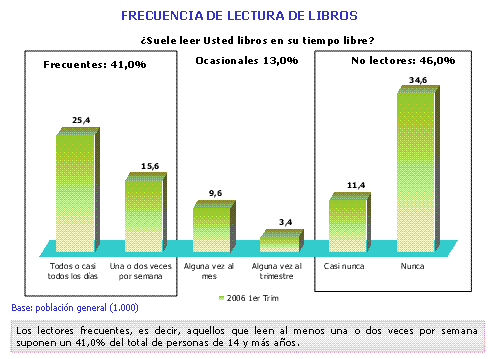
El verdadero mal de este país es la falta de cultura. Más de un tercio de la población confiesa no leer libros nunca, y cerca de la mitad (46%), nunca o casi nunca. Y encima, vamos a peor: este año se incrementa un 3,2% la población no lectora, frente a los datos anteriores de 2005.

Quienes más leen son mujeres, jóvenes, universitarias, que viven en grandes ciudades. En general, uno de cada cuatro españoles lee libros todos los días o casi todos los días. La lista de lectores más frecuentes va encabezada por las personas entre 25 y 34 años. Así lo muestra el Barómetro de hábitos de lectura y compra de libros correspondiente al primer trimestre de 2006, elaborado por Precisa para la Federación de Gremios de Editores de España y patrocinado por el Ministerio de Cultura, publicado el 26 de Abril pasado.

Estos datos no nos sorprenden. Basta con subir al autobús o bajar al metro, para en un momento poder comprobarlo en persona, directamente. Sólo con dirigir la mirada en los transportes colectivos, descubrimos un público intelectual femenino, joven y bien dispuesto, devorando la lectura, agarradas a una edición de libro encuadernado... frecuentemente novelas.

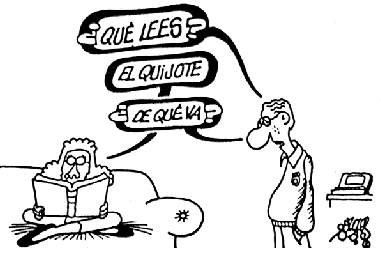
Quizá motivado por el aniversario del Quijote, el porcentaje de personas que leen libros en España a diario ha aumentado, hasta situarse en un 25,4% de la población mayor de 14 años. Quienes más leen (un 41%), al menos una o dos veces por semana, son las mujeres: un 42,2%, frente al 39,4% de hombres. El 81% cuenta con estudios universitarios y habitan en ciudades de más de un millón de habitantes. Los siguientes ciudadanos más lectores son el grupo entre 14 y 24 años, que ha sido antes el que más leía en 2005.

Los que menos leen son los mayores de 55 años, sobre todo a partir de los 65 años. Representan un tercio del total. Más aún se acrecienta esta diferencia en municipios de menos de 50.000 habitantes, donde vive un 48,9% de la población. La media de lectura global es de 5,7 horas semanales. Respecto a las lenguas, el 45,1% reconoce leer también en otros idiomas, como inglés (14,6%) y catalán (10,5%).

13 junio 2006

Nikosi sikelèl iAfrica! God bless Africa!

Africa is a gift from heaven: the jewel of our world, our origin, our treasure, our present and God’s donation. There are no words to explain how life is there: musical, dancer, happy, fresh and sunny. God Bless Africa was the winner in the Africa Union Symbols competition. Just press here and have the pleasant sense of hearing - and try not to cry. These are the lyrics:

- God Bless Africa. We thy children and thy flock. In all our endeavors Bless. Africa, our family, God Bless Africa!

- God Bless Africa. Kingdom loyalty a must, Where Africa, the kingdom. Africa, our family, God Bless Africa!

- God Bless Africa. Colonialism a past. Now we have to move ahead. Africa, our family, God Bless Africa!

- God Bless Africa. Slavery, cruelty of mankind Good. God save all souls involved. Africa, our family, God Bless Africa!

- God Bless Africa. Time to get ourselves rid of, Diseases, Wars, and Hunger. Africa, our family, God Bless Africa!

- God Bless Africa. In unity we shall thrive. All hail African Union. Africa, our family, God Bless Africa!

- God Bless Africa. Dear home we love and cherish. Beloved home forever. Africa, our family, until eternity, God Bless Africa!

12 junio 2006

Badly of Africa

This continent with its wonders, with its scents, its colors, its people.. all these feelings enters to you within and they will not leave to you more. This is why all those that arrive those lands are affections from a badly incurable one: "badly of Africa", unbearable wish of comming back to Africa again when you leave it. Perhaps that for many of us have a big love and attraction for that continent: the badly of Africa.

As Franco Battiato’s song lyrics say,
“…mal de África, mal de África
[badly of Africa, badly of Africa]
Saturday night I'm a dreamer
I can't live without you
on my own lies a photograph
please come back and stand by me”.

That pretty words to express his feelings, congratulations, they have moved me. Although I am not a Medicine Doctor, that diagnose is that someone suffers the BAD call OF AFRICA, all the one that has dreamed sometimes about that wonderful paradise and visits it, returns broken, because a small piece of your heart remained there, and you will always have the necessity to return to recover it. I take all the life dreaming about my trip, that if God wants I will do, and either you not yet see... I have gone, and or I am looking for the form of as I can save to repeat it again.

Who spends days in Africa, is said, he will always feel desire to return to visit this enigmatic and wonderful continent: thus it is 'badly of Africa’, a beautiful disease for which is no antidote except for a new trip.

It will be, perhaps, because there the light, the colors and the scents seem more alive and near, because the nature is wealthy and amiable although splendorous. Yes, Africa manages to bewitch just by a glance.

11 junio 2006

…and Soweto!

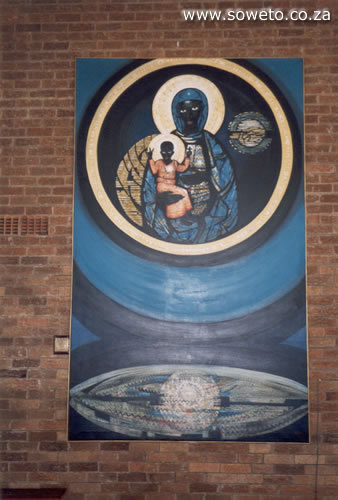
SOuth WEstern TOwnships – Soweto, my dear friend Paul Mbenenge’s neighbourhood, may be the largest black city in Africa. It gives you an idea about how 3,5 million people got its fame during the "apartheid" years. The Picture 'Madonna and Child of Soweto' painted by Larry Scully (1922-2002) in the Regina Mundi Catholic church gives experience of the role of the church during the struggle years. Death and attacks to faithful Christians were held inside it. She is a black African Lady with an also black Child, as Czestochowa, Pilar or Montserrat. Behind both, an eye of Our Lady appears, with a view of Soweto painted on it, so as She watches the town in her pupil.

Jo’burg’s infamous black suburb, Soweto, long a center of anti-apartheid activity, is the most highly populated black urban residential area in South Africa, with nearly a million people. Not surprisingly then, it leads the way in politics, fashion, dance and music, among other things. Sowetans have adapted to their own culture and come up with a new kind of sophistication.

Now it is a distinct lack of space created by borders in years past gives way to new neighbourhoods, with larger homes and a Southern California flavour, on the outskirts and tastes, as my friend Paul Mbenenge says. The new place serves as a model for upward mobility and work ethic, rather than a source of jealousy for those a block away living in homes a fraction of the size. Not matter about it.

There are 'informal' shacks built in packed places with an occasional public get together. Stopping and walking through one of these, we saw homes with two rooms -kitchen and bedroom-, a daycare center with a church service held outdoors, singing acapella in Zulu. Happy people and smiling guys.

A drive through the Soweto market offers second hand clothing laid out for display. The west side of Soweto, shows Desmond Tutu's home, Winnie Mandela's home, Hector Pieterson museum, on the site of his death in 1976, shot during the student uprising that sparked 18 years of unrest, sanctions against South Africa. During the demonstrations, the day Pieterson was shot, and knew many of the leaders of the black consciousness movement . The history of the events is told with personal knowledge and it brings back memories of difficult days, a powerful experience, and a reminder of how far South Africa has come from there nowadays.

10 junio 2006

Jo’burg…

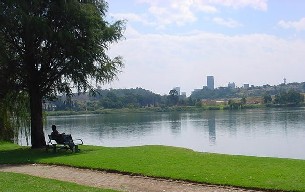
Johannesburg (or “Jo’burg” as it is known) is South Africa’s largest city, where I did live. Nevertheless the Parliament is in the official capital city - Pretoria. But life is in Jo’burg.

The name of the city is obvious. There is not dispute that it was so called after a man named Johann. The only problem is that Johann was a common Dutch name in the late nineteenth century. When gold was discovered in mid-1886, the state sent two men, Rissik and Christiaan Johannes Joubert to investigate the area and choose a site on which a town could be built among gold seekers. Did both decide that name because Johann was a name they had in common?

But there is also a third claimant, veldkornet Johannes Meyer, the first government official in the area, who attempted to bring order with a system to peg out mine claims. An early digger John Burrows said that "everybody at that time was under the impression that the suggestion to name the town after Johannes Meyer had been carried out."

Anyway, this modern metropolis has many positives to offer. Certainly it is the most important urban centre for business and economy all around southern hemisphere. It is a very important place for diversity and richness of mineral deposits, including coal, iron, copper, gold, platinum. May be in some of them it is the most principal business site in the planet.

It is also a human complete mix of all world cultures and razes. You can meet there all languages and types: African, European, Indian, Chinese… Museum of Africa gives an unflinching look at this country’s history. Rests of golden mines –machines and hills of rests of no useful stones – remain just today in the very heart of the city, remembering the origin history to their inhabitants.

09 junio 2006

My Africa

Last year 2005 I spent my Christmas holidays in South Africa. It was summer there, in the southern hemisphere, instead of here winter in December. I had the not valuable opportunity to see with my eyes that incredible lands and peoples. Nature there was really wild, for a ‘whitey European man’ like me. All times without exception when I heard the sounds of the birds, I always looked for the mobile cell phone which I supposed sounding. Ha, ha, ha!

Perhaps South Africa is the most well-known place of Africa among modern people. Once the reviled home of the hated racist system of apartheid disappeared, it is now a vibrant multicultural country coming really into its own. With a population of more than 45 million people, four major religions and at least 11 spoken languages, this country is nothing if not diverse: the Nguni people, comprising the Zulu, Xhosa, Ndebele and Swazi; the Sotho-Tswana people, comprising the Southern, Northern and Western Sotho (Tswana); the Tsonga, the Venda, Indians, Chinese and Afrikaners Europeans five centuries there which call themselves ‘the only white African tribe’.


There is much for a range to explore in South Africa, everyone from the timid observer to the daring adventurer. South Africa is a land of amazing natural beauty: lush vineyards and rocky coasts on the Cape of Good Hope; fertile farmland in Mpumalanga; snow-topped mountains on the Drakensberg mountain range and even hills or beaches to choose from in KwaZulu-Natal. Of course, wildlife is a major draw, with more than 300 game and nature reserves to suit any kind of animal lover.

08 junio 2006

African values

Here we have recollected the most important traditional African values. These principles are listed here, first in Swahili and then in English:

Umoja (Unity) - To strive for and maintain unity in the family, community, nation, and race.

Kujichagulia (Self-determination) - To define ourselves, name ourselves, create for ourselves and speak for ourselves.

Ujima (Collective Work and Responsibility) - To build and maintain our community together and make our sister's and brothers' problems our problems and to solve them together.

Ujamaa (Cooperative Economics) - To build and maintain our own stores, shops and other businesses and to profit from them.

Nia (Purpose) - To make our collective vocation the building and developing of our community in order to restore our people to their traditional greatness.

Kuumba (Creativity) - To always do as much as we can, in the way that we can, in order to leave out community more beautiful and beneficial than we inherited it.

Imani (Faith) - To believe with all our heart in our people, our parents, our teachers, our leaders and the righteousness and victory of our struggle.

And I add another - Harambee, the Swahili word meaning unite to work together.

07 junio 2006

Africa is History

It is interesting for us to know how we were ten hundred centuries ago. Perhaps the most exact remain is in our original place. Four own cultural characteristics describe the idiosyncrasy of African people: a narrow contact with the nature, living in harmony with it, not still enslaved of the technique; supremacy of the common good front over the individual interest; oral expression used like main instrument for the word and music, and by library and file, the memory; sense of the sacred things: all their traditions reflect a religious vision of the world and shows how their relation with the universe is lived with a great sense of what is sacred. A lot of important truths not to forget.

Solidarity, compassion, equality. You can find there the great richness of people who resist with a lot of belief to be happy with material matters as you are. Life continues and people just go on, people believe in their children so they continue. In Africa there is a lot of sanity out of contamination. Africans on the whole are very healthy people, bodily and morally. Even physically, Africans are very strong, except of course those people who have been hit by famine and war and disease.

Africans are very healthy in mind and fine-looking physically. The traditions in Africa have very sane origins. People are vigorous mentally, and that is part of the tradition and the culture of Africa. People used to live only with this sort of economy: they had one cow or two and they planted things, and they bartered. All we can do in the meantime is to live authentically, to believe genuinely. Not want too much power, to share things. Most of the time it doesn’t come naturally, and yet a lot of people are capable of it. It is in the values of African people, this solidarity, compassion and equality.

06 junio 2006

Time for African heroes

A very important question for human family is not forget that many of our common elements and values in our modern culture have their origin in those earliest lands of Africa. Afro-American music (jazz, Caribbean, Brazilian), giants of Basket (players of NBA as Michael Jordan), immense football players (afro Brazilians as Pelé or Ronaldinho, an incredible Cameron footballer like Eto’o), world champions of boxing, first speed and distance runners... all them mean for us a big element of proud. Olympic Games offer many proves of it. U.S.A. has also many great people form this continent in their History.

Authorities of such prestige as Kofi Annan, Jomo Kenyatta, Desmond Tutu, Nelson Mandela or Martin Luther King have made this world more human. Freedom - not only for European persons- was a gift obtained by those heroes of human history. It is the same in music and cinema. Famous actors as Denzel Washington - the first black actor to win the best actor Oscar, or Will Smith and lots of singers of plenty styles contribute to display their productions to all world.

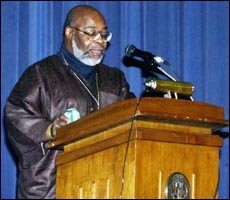
Runoko Rashidi, an African History scholar, lectured his lesson last 17th April part of African world History. The thirty plus dynasties of ancient Egypt where also African. “Twenty-five of these dynasties were African, ranging from 3400 B.C. to the time of Alexander of Macedon,” Rashidi explained. “This has been proven with skin samples from royal mummies. These were all black people.”

A black skinned artifact of Tutankhamen in one slide had a connection with U.S. history. “When Tut came to the U.S., they left this [the artifact] behind,” Rashidi said. “Europeans want to claim Egypt for their own.” In closing, Rashidi told the audience, “We spend so much time trying to do in one month [African-American History Month] what everyone else does in twelve. It is time for us to develop our own heroes”.


05 junio 2006

Out-of-Africa. All of us come from Africa

Where do we come from? Appearing from the Great Lakes 100,000 years ago, more or less. That is the place of the beginning of our common human nature. Complete men and women population of earth dwelt from black continent. So teaches us Biology and Ethnic Science’s discoveries.

Spain in Europe has a big tradition on its own receiving new people: Iberians, Greeks, Phoenicians, Carthaginians, Romans, German barbarians, Arabs, Jews... It is not estrange that many sub Saharans inhabitants are nowadays crossing Mediterranean sea, coming again to southern Europe.

Same similar situations happen in the reverse direction. A classic example is Karen von Blixen-Finecke (dead in 1962), the most famous of all modern Danish writers, also known under her pen name Isak Dinesen. She wrote a famous autobiographic novel titled "Out of Africa", referrring her account of living in Kenia, and the love she felt to that people and lands. It was used also as subject for a film based on one of her stories.

All the fossil rest of Australopithecus have been found in Africa: Tanzania, Kenya, Ethiopia, Chad and South Africa. About 1.8 million ago appeared Homo erectus our ancestor, which was the first human who left rests of cultural and social aspects, going from Africa to Europe and Asia, using fire and with social structure for harvesting food, with fixed fire positions and a prolonged period of growth and maturation of the children. That is the beginning of our human species.

04 junio 2006

I do love Africa

There are some important reasons to love Africa. African jokes when just found something funny and can smile at ridiculous events too. Same ludicrous situations can be found everywhere too. Just smile, love each other and try to help when you can. Africans are very welcoming. They love and respect their guests, no matter where they come from.

Africa is lovely because it has great things which take us closer to nature and ensure our social and physical wellbeing. People gather there in large numbers, to mourn with those who mourn and to rejoice with those who rejoice. There is a flower blooming of youth, health, happiness and songs everywhere.

Light flows al five a.m. in the morning, sinning with all clarity and brightness before sun rises. The spirit of African communion comes alive wherever it is present, filling up of colour every aspect of life, music and dance with rhythm from their bones, brightly dressed with the sunny tone of their smile, the golden yellow sunrise to the amazing sunsets. Such a paradise full of life and happiness.

03 junio 2006

Wonderful Africa


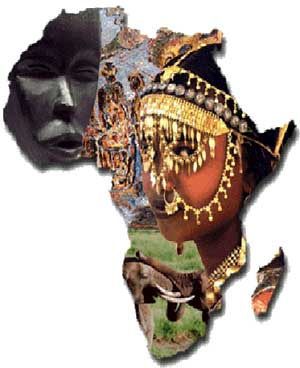
With fifty three independent States and differences, African continent continues surprising us today by its complexity. There are sufficient tests detected to conclude that in that territory the humanization process began. Africa is the cradle of the humanity and from all the species of human beings who have been expanded by the rest of continents. That fact includes our type –Homo Sapiens, who comes from there.

More than 1,000 different languages are spoken at the moment in Africa. Older linguistic groups of the humanity occur in Africa, where is the cradle of everyone of them. A remarkable particularity is the own language Xhosa, as my friend Paul Mbenenge says. This talk uses a special tongue sound like a snap, very amusing noise. It belongs to the Kung San, who probably are the main trunk of which all the languages spoken in the world are originated. The most extended languages, with more than 120 million speakers, are the kiswahilí or suahilí and haussa (fulbé or fulfulde'). All these are “linguas francas” spoken by diverse cultural groups. More than a half of Africans are bilingual. It is a lovely human richness.

Sahara Desert alone is expanding southwards at an average of 0.8 km (½ mile) a month. The River Nile drains north-eastern Africa, and with its 6,756 km (4,198 miles), is the longest river in the world -66 miles longer than anyone had previously suspected. Lake Tanganyika is the second deepest freshwater lake in the world, after Lake Baikal, its depth is 1,436 m (4,710 ft). Lake Victoria is the world's second-largest freshwater lake - covering an area of 69,490 sq km. Lake Malawi contains the largest number of fish species of any lake in the world, probably over 500 from ten families.

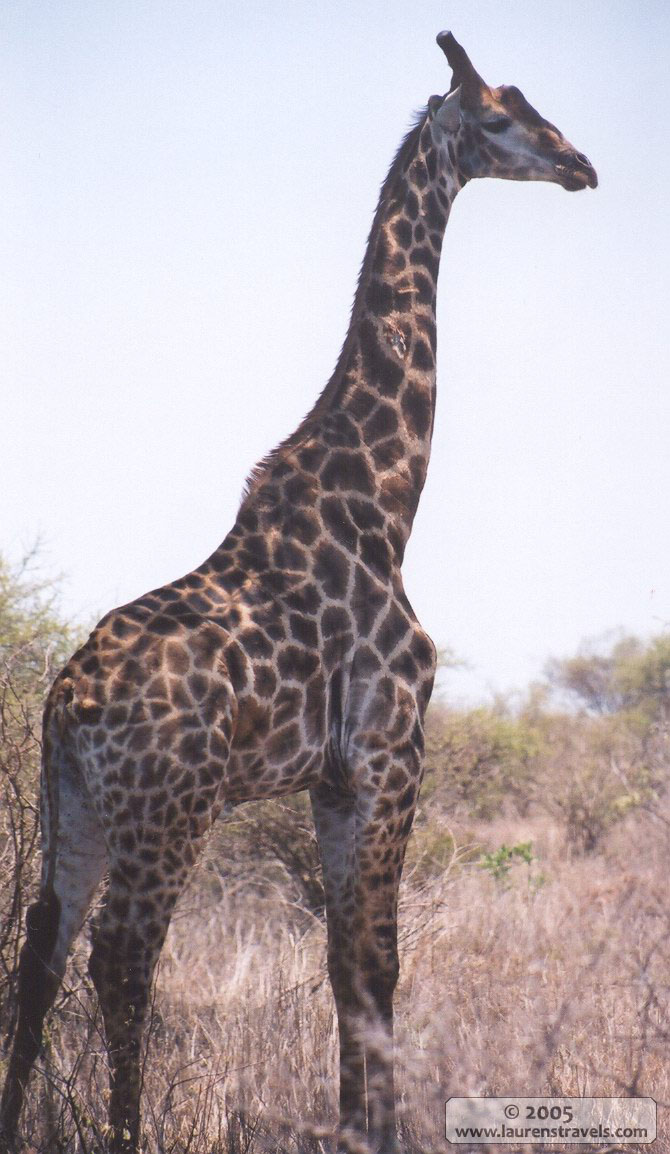
The African elephant is the largest living land mammal alive. The tallest animal on earth is the giraffe - its horn tops being up to 6 meters above ground level.

The world's largest diamond is the Cullinan, found in South Africa in 1905, which now forms part of the British crown jewels.

This continent is a complete resource of natural treasures.

02 junio 2006

Africa: our family home

We are all a whole Family, and Africa is our sweetheart abode, to visit and love. “Go Home to the Motherland”. One thing is certain: the continent of Africa is an authentic domicile for all of us. Here is an important reason to love peoples and places of our common origin. Africa keeps an important lesson of History and Humanity. Most of our past prehistoric life dwelt there during the longest time. That is the universal human first place, the important motive which makes us, all human beings, brothers and sisters of the same united family.

Nowadays -in a true African style- Africans extend a very warm greeting to everybody. They are immensely proud to welcome their visitors you to their site. They are glad and hope that guest’s experience will be one that they will enjoy most. Africa is our starting point address, and African people invite their friends to join them in, through the finest genuine African talent.

About 100,000 years back, the considered world-wide population in 1 million Homo erectus disappeared, being replaced by our new species, Homo sapiens, sons and daughters of our African Grandma. The hypothesis "out-of-Africa" suggests that Neanderthals were a separated species (Homo Neanderthalensis) who was replaced by modern humans (Homo sapiens) radiated from Africa. Africa is foundation place to some of the most ancient and beautiful art in the world –as the rock paintings of the San. It is also home to vibrant and challenging artists, from the colonial epoch to the contemporary times. So, all non African people in the world live out-of-Africa: our first family common home.

01 junio 2006

Our dear shared African Grandma

I will try to explain with my tiny English expression what Africa means for me, and the reason for it either. This is all what I can offer, as a humble present to my dreadfully dear African friends: Paul Mbenenge, Andrew Woghiren, Fidel Namisi, Matthew Igbinovia, Tuli... For proud and pride to them, our Molecular clock dates the exact age of when human species started. Our first human mother, a single black skin and sub Saharan African “mitochondrial Eve”, lived about 100,000 years ago. She is the most-recent common ancestor of all humans alive on Earth, in line with our matrilineal descent.

Maternal inheritance of Mitochondrial Eve is demonstrated by our DNA, which is an almost exact copy of the DNA of our maternal grandmother. In fact, the mutations in the mitochondrial DNA we ware prove the period timed by the molecular clock, that allows us to determine how much time has elapsed since Mitochondrial Eve lived. So, the existence of the Mitochondrial Eve is NOT a theory; it is a mathematical fact.

Nobody disputes that hominids once emerged from Africa, were they appeared, colonizing Eurasia. Human precursors coming from Africa began an “Out of Africa” group. We —physically and intellectually modern humans Homo sapiens— were who colonized Eurasia, replacing precedent so-called archaic humans. As a result, nowadays Africans look forward to the opportunity to share with us their territory, the land of our birth, the very special corner of the world where our old parents were born and raised. Our human family has a long history of centuries lived here.